Thursday, February 26, 2009

Forward Capture: A History with Value

Forward Capture is a project created by the Center for History and New Media and the National Council on Public History in the United States. Together they are soliciting thoughts from public historians on where the future of public history. It's a great example of creating opportunities to participate in a larger sharing of knowledge and the results will form the backbone of a larger presentation at the NCPH annual meeting in April 2009.

If you haven't yet done so please make your own contribution to the site. I've posted my own entry below that tries to tackle the issue of value and history which I think is really important. And fortunately if you read my blog, occasionally, you will know that I don't normally talk like I'm staring into the sky.

The Future of Public History:

Public Historians that embrace history, and history that embraces public historians.

The future of public history is a future where history has value and is valued. For history to be important in society is has to have some value – whether it tells someone about their own personal past, the society they live in, or the events that they face. Public Historians need to serve as gatherers and aggregators, using skill sets developed through sound research and analysis, to share the value of the work done by academic and local historians with an audience of informed and interested citizens.

A field that encourages high school students to study history, encourages graduates to take history programs in college and university, and encourages university and college graduates to continue working in the field – whether through academia, education, museums, archives or publications.

A modern inviting history that is urban and edgy in style and content. Content and presentation should be fresh and bold, that utilizes the style already relevant in other fields.

A participatory history that invites each citizen to provide their own story. Together these stories provide details and life while also illuminating the larger patterns that historians research each and every day. A public history that embraces the ability of new technology, life forward capture has, to include, invite, and reshape the role of the historian.

Thursday, February 19, 2009

Change comes to Canada

Today United States President Barack Obama is making his first official visit to our national capital. I know that Canadians from coast to coast are warmly welcoming the President and it has been the main topic of discussion here for the last week at least. 

His first discussion today is with Governor-General Michaƫlle Jean (a glimpse of which I just caught on the CBC). At the time of his election the Governor-General I think best transmitted the sentiments of Canadians in her warm message of hope and celebration. You can watch her full statement on her website, www.citizensvoices.gg.ca

Citizens Voices is a great website for each and every Canadian to learn more about the valuable work the Governor-General does and to engage with other Canadians on important topics. It brings the kind of openess and inclusion that should be of value to every level of government - something I think the New President would greatly aprove. 

Welcome to Canada Mr. President.

Wednesday, February 18, 2009

TED: Ideas woth spreading to your students


One of the reason's why I started on this digital history adventure just over three years ago was that I was going to graduate from University. I wasn't worried about the work place or what the future held - that actually excited me and I was hopeful of trying new things. But what I was worried about was loosing touch with a larger academic community. I felt that through technology I could still continue to learn - learn about history, about technology, and about just great ideas that still made my brain jump the way it did in University.

Fortunately the number size of the online idea community is continuing to grow, and one that is readily available to your students. We talk often about issues of civics and engagement, making sure that students are informed about what is happening in the world. Surely a great endeavor that is of the utmost importance. But at some point students also need to learn about more that what is on the six o'clock news or in the local paper - we have to have some connection to a wider current of ideas and thoughts.

Which brings me back to TED: Technology, Entertainment, Design. I love hearing interesting and smart people talk about things they find interesting and are passionate about. Anytime you can hear or spend time with a passionate person, you will grow yourself. In life we often have too few opportunities to share in this community.

TED let's you meet interesting and passionate people everyday. They inspire people in a wide variety of fields but share common threads that somehow relate back to each of us. Never in history have we had such opportunities - through TED and other projects - to learn and share in the wisdom of others. They do it because it matters to them and they are passionate about their work.

Every classroom should take a few moments out for a TED talk now and then. And of course they have a school program as well - so start finding the special lights in your community.

Sunday, February 08, 2009

Popular Relevance

As part of an Introduction to Learning Technologies course at the University of Manitoba I've been exploring the program Digg. We drew our projects from We Are Media, a website designed to help non-profit organizations better use new media in their endeavours.

Digg is a social bookmarking tool that you may have noticed before on many news or information websites. The tool allows you to "digg" content that you are in to (if that's what you're into). Content that is most popular, in theory, rises to the top and shares information with a larger audience, focusing in on the best and most interesting stories.

There are some great advantages to Digg that make it very accessible. The program allows to you install a toolbar and follow sites live as you visit them, seeing who and how many people are interested in a website.

But for educational purposes, and arguably for any purposes online, Digg provides more of a popular than relevant story. Content is largely pulled from mainstream media websites with stories "Dugg" by a core group of supporters.

Creating communites of practice and learning communities doesn't require mass participation. I trust the websites and blogs of my colegues to post material that I'm interested in and that is relevant. I don't really expect it to be popular with a wide audience. If I wanted that I would have stayed with traditional media sources - they are surprisingly good at covering all things popular.

The other thing is that Digg let's you build a community of "Friends." But this suggests that I only learn from my friends. I often times learn from complete strangers. It's the thousands of people circling the globe, people I never would have met before, that are often working on and considering simliar thoughts and issues.

For now I'm sticking with Del.ico.us, in fact I think I'm even going to start tagging even more.

Tuesday, December 09, 2008

Charter of Rights and Freedoms via Wordle

A couple of months ago I posted about a program called Wordle which allows you to create "word clouds" from a body of text or a blog. I had a couple of ideas but hadn't really thought that much more about it.

I was just listening to Eric Langhorst's podcast over at Speaking of History and he instantly got me interested in it again. Teaching about American government, he ran the US constitution through Wordle and created a great starting point for a class discussion. It's fun and engaging and immediately provides a windown into the focus of the document.

So of course I reached for our Canadian equivalent and ran the Charter of Rights and Freedoms through Wordle and got the following result:

Click on the link and try putting your own historical documents into Wordle - let's see what other results we can come up with.

Tuesday, November 25, 2008

Meet the Teachers

Each year Canada's National History Society presents the Governor General's Awards for Excellence in Teaching Canadian History. Last year we piloted a new program to record interviews with our recipients and share them with a wider audience

The results were positive and this year we have improved the quality significantly. Meeting and sharing ideas seems so key to the online experience and it just shows how easy it has become to share the work of these tremendous teachers.

Rather than reading a bio, we now have the opportunity to step into the classroom and meet the teachers, to see their projects and personalities shine through. There are six video's in total, but I posted Mike Ward's below. Reading about his project of creating a table with a settler community is one thing, but seeing it in action is totally different. Each of the videos brings that life forward.


A special thanks to our videographer Jayson Go for his help with each of the videos.

Also a thank you to Philip Ling, Shephanie Ha, and Geoff Ives, in Ottawa who did a great job on a short timeline helping with the video interview of Jean-Pierre Frigon.

Wednesday, November 19, 2008

History Flash

Ok Historians, you know you would have fun with a little flash tool like this.

I watched the election results through the New York Times as well. There website is just so far ahead of everything else.

Tuesday, October 28, 2008

The Collaborative Project

David Suzuki has me inspired. Not just to build an organic garden, but to build programs and projects that are worthy of the technology available to us. 

The David Suzuki Digs My Garden project used Flickr and online video as a way to make this contest a little bit different. From across Canada people entered their gardens by uploading their images to the official contest Flickr group. To enter the contest I joined the group and added my own garden images that were already posted on my own Flickr group.


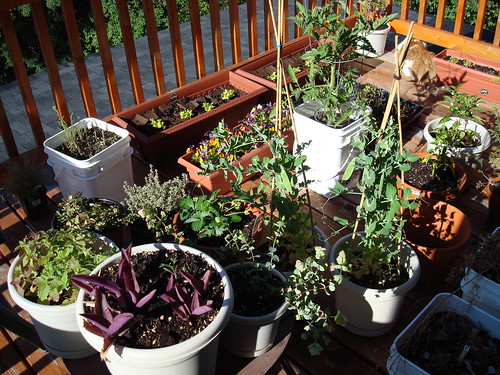
On my own image I was able to tag all of the different plants in our pesticide free garden - from the tango lettuce to the organic catnip to our cat Mister T. Online programs are about presenting, storing and registering information in ways that were not previously possible.

Not only that but we also received a really cool video thank you from David Suzuki as well. This is how new projects can use technology in a collaborative and inspiring way. By sharing gardens from across Canada we not only created a historical record of gardening in the year 2008, we also provide a knowledge exchange.

Strangely enough at the same time another photo on Flickr was also being targeted by an online collaborative project. Schmap is a digital map program that provides information about cities from around the world. 

The map makers from the city of Minneapolis had taged two of my photos from our trip to the city this past summer. The photos had been chosen for a contest (there is always a hook) and they would like to know if I would be interested in entering the photo. The "winning" images will be used for a photo guide to the city.


Like most folks I'm happy to have the pictures used and happily clicked yes. Together all of these images can form a collaborative project, from hundreds of people. Not only that, suddenly I know Schmap exists, I'm going to tell my friends to all go and look for my picture, and maybe I will use this website in the future. 

By giving me a role and involvement, by helping me feel like a collaborator rather than a user, I suddenly am considerably more connected to this website.

Monday, October 27, 2008

David Suzuki Digs My Garden

David Suzuki ran a great contest this summer to encourage Canadians to grow organic and pesticide free gardens. We live in an appartment here in Winnipeg and kept our organic garden going all summer - with some great tomatoes to show for it!

Our garden won in the Balcony category and we received this special message from David Suzuki (unfortunately we submitted our picture via flickr and my account name there is generalamazo, thus the thank you). But it's pretty cool and the whole contest had a great digital component that I will talk about more in the next day or two.

Thursday, October 02, 2008

Political Junkie Part Two

I'm not sure how I watched politics without the internet. The Museum of the Moving Image has a great website, The Living Room Candidate, with campaign ads from every election going back to 1952.


You said it Ike!

Wednesday, October 01, 2008

Election Fever - Apathy is Boring

Canada, as you have noticed, is in the middle of an election at the moment. And one of the best places for helping your students get involved and active is Apathy is Boring. They are a great organization that works to get young people not just voting but engaged in the political process.

What also makes this organization so terrific is the way they use technology. They are creating new ways for students to interact with politicians and to get information about platforms and policies. Why should we expect that students want to learn about politics the same way as previous generations?

They have just released a candidates guide to reaching young people. The guide was sent to candidates of all parties to help them use technology to reach and engage young people.

The guide should be mandatory reading for all candidates and their election teams. But if you go through and replace the word candidate with teacher, there is also a lot of lessons to be learned for the classroom.......

Thursday, September 11, 2008

If my Mom can blog update

I was home over the weekend and was working with my mom on her blog and flickr page. In the summer we got her started with a blog, flickr, and delicious account.

Now her class, Geography of Northern Canada, is off to a great start and the online components are coming quickly. My mom has hundreds of great slides from trip sand living in the north. Rather than lug around the old projector this year, she had them all transferred digital copies and we uploaded them on to her flickr site. Then we added a flickr badge to share them on her blog. (That's me in the white in Arviat)


But best of all we used a new program called Issuu to publish her syllabus. Rather than just posting a link to an online document or hiding it away somewhere, Issuu allows us to store an online copy that you can flick through easily. You can also print and download straight from the program.

Best of all these programs and documents are accessible from anywhere - a digital work station. No slide projects, no flash drives, no laptops. Just a linked up classroom that can be moved anywhere.

Wednesday, August 27, 2008

Making the History of 1989

Great new website with primary sources, first hand accounts, and teaching strategies from the Centre for History and New Media. Check out Making the History of 1989 if you are teaching about the Cold War this year.

Tuesday, August 26, 2008

Political Junkie

I admit in my spare time I'm a pretty heavy political junkie. And I love the New York Times website for interactive and interesting online features. I will let you explore them on your own but the one I wanted to point out for History Teachers is a timeline of Democratic Conventions (I assume/hope the Republican one is on the way).

In one small presentation you could teach an entire class on the politics, economics, and social aspects of the United States since 1948. I found the 1956 convention in Chicago particularly interesting and wanted to point out Adlai Stevenson's speech at the end. How things have changed along the way.

Tuesday, August 12, 2008

Vocabulary of the Blog

The other day I came across an interesting program called Wordle. The site grabs your RSS feed and turns it into a word mosaic - making most used words larger. So of course I checked my own blog and created the following:

What I actually found most interesting was the way it emphasized my apparently limited vocabulary on the blog. With words such as great, fun, and really jumping out - I actually got an unfortunately clear view of my writing (I'm blaming it all on emailing).

I thought a really interesting project with your students would be to take their work - even all of their essays - dump them into a blog on blogger, and then run them through Wordle to see what words come up most. The exercise should improve vocabulary and also be a bit of ... (anything fun) unbridled enthusiasm....? I'm trying anyways.

You could also do this as a class project to see what vocabulary words in general your students use most.

Thursday, August 07, 2008

10 Photos that Changed Canada

The Beaver magazine today is launching a special feature today called the 10 photos that changed Canada. It's a great feature about some of the definitive images that have shaped Canada. The article is available in the August/September 2008 issue of the magazine.

I wanted to point it out because not only is it a fun feature, but we also have several podcast interviews that I thought were particularly interesting this month. Ray Argyle talks about meeting Robert Mallandaine, who is looking over Donald Smith's shoulder as he pounds home the last spike - arguably Canada's most famous photo.


For anyone who can follow along, there is also a great interview in French with Robert Nadon, the photographer who captured the image of Pierre Laporte's body in the trunk of a car during the October Crisis.

And finally, you can also hear Ric Ernst discuss how the judges narrowed down their list of iconic images.

Wednesday, August 06, 2008

History of America Tour: Magical History Tour

Just outside of the Mill City Museum we were delighted to see the Magical History Tour passing in front of The Guthrie Theatre.

Now since I've gotten back apparently there are Segway history tours in a lot of cities. But I still thought it was a really fun way to get around. If we had more time I definitely would have gone for a spin - sort of kicking myself now that I didn't.

Tuesday, August 05, 2008

History of America Tour: The Mill City Museum


About a week ago I ventured down into the heart of America down to the great state of Kansas. Along the way I we stopped at a number of historic sites and museums. It was a fun chance not only to visit some new place and learn a bit of history, but to see some new and original projects.

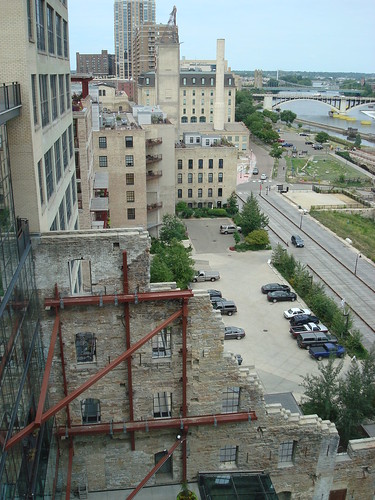
One of the first stops along the way was in Minneapolis, Minnesota. Minneapolis is actually a terrific city with a surprising amount of things happening (sorry Minneapolis we had low expectations going in). It's got great art galleries, theaters, and of course, museums. We stopped at the Mill City Museum in the downtown.

Now the history of flour milling might not sound all that exciting, but there are definitely some great projects happening here. The Museum itself is built into the preserved ruins of the Washburn A Mill. Aside from being a great piece of architecture and preservation, they offer an excellent and smart little history of the city in 19 minutes that is quite well done.

But most impressive is the Flour Tower. Rather than producing a regular exhibit with displays set in place, they moved the exhibit into the former grain elevator. You step on and ride the elevator between floors, where the doors open into each display area. The story follows all parts of the milling process and is narrated with first hand accounts of what it was like to work in the factory as you travel between floors.

It's a terrific way to take an otherwise quite static exhibit and make it engaging and interesting.

Monday, July 28, 2008

350

For those of you looking for fun Climate Change content for your classroom, check out 350.org and their new video. It's a really smart and sleek new video about controlling climate change.


The video was created by Free Range Studios (creativity with a conscience) who are doing some great social justice and environment projects at the moment. They also brought us Story of Stuff which I've mentioned before and has taken a place of honor on the sidebar.

You should definitely check out their website. They have lots of really great interactive projects, many of which have classroom connections.

Monday, July 07, 2008

If you do only one project next year....

I know the summer is kicking in but if you happen to drift into thinking about next year here is the one project you should do in your classroom - Google SketchUp.

I'm not an expert on the program, but essentially Google SketchUp allows you to create 3d buildings which can then be placed on the map in Google Earth. Imagine in your classroom creating 3d models of your historic community.

The actual technical work of Google Sketch Up is pretty straightforward and the historical research required to recreate and measure a building would bring in lots of interesting primary sources. Imagine a well documented building with first hand accounts, letters, and documents detailing every part of the building. And best of the program to do that project is already fully functional.

Google has also posted selections from it's recent Google Sketch Up basecamp (sadly I was not drawn to participate). Spend the summer getting used to the program and then clean up at the local Heritage Fair when your students present 3d models instead of outdated power point presentations.