Friday, May 14, 2010

We are moving

Hello friends,

It's been a few years of writing about a digital history education, and now with the launch of our new website www.canadashistory.ca, digital history education is moving.

I'm excited about the change, as the new space should give me more time to write and the ability to write on a wider variety of topics. You can read my first new post about Pierre Berton here.

Thanks for following, and hope to see you on the other side.

Joel

Thursday, April 01, 2010

UnConferencing History Education Part 2

Having some success in the bid to get more time for teachers to talk to teachers at annual conferences. I've put together a description of what my ideal (asterisked with the note that this not a full UnConference, but the ideal middle ground that gets things moving).

Take a look through the list and let me know what you think. We could definitely use some feedback.

The History UnConference

830 - 900 Arrival and Registration (possibly some activity to get people started, it would cool to have a power point rigged up to a projector, and people could add thoughts about the day - sort of like a Twitter feed, for the non Twitter users.)

900-915 Greetings

915-930 First lightning round of presentations - five presenters for 2 minutes each, 8 slides timed to 15 seconds each. A quick way to get people going.

930-1030 Keynote about a topic

1030-1045 Lightning Round #2 - 5 more quick presenters

1045-1100 Display and Find your workshop

1100-1200 First Round, Teachers divided by grade level into smaller groups of 15 or so. One moderator leads discussion around theme of the conference in your classroom. Each person talking for two minutes about the theme and their classroom. 15 minutes groups talk about the challenges they face. Poster Paper each group writes out three key challenges that they face in the classroom related to this.

1200-100 Display and Lunch, Poster Paper is posted in the main area for teachers to see what other groups were discussing. (Digital aspect could interview teachers about their experiences, a sort of speaker's corner booth.)

100-200 Regular presentations/sessions which people have signed up for.

200-215 break and display

215-315 Final round related back to the original morning discussion. Teachers could meet in smaller groups again with different people, each tackling a set of challenges posted in the morning. Similar discussion format facilitated by a moderator and secretary. Notes would again be posted afterwards with online component to share results. Teachers asked to come up with solutions to each set of challenges, with specific actions.

Monday, February 08, 2010

UnConferencing History Education

As a seasoned veteran of the History Education conferences circuit each fall, I've been thinking a lot about them lately. My experiences and impressions of the annual teacher conferences has really only declined over the past few years.

From my own impression, numbers are increasingly down and increasing participation in provincial teaching bodies continues to be a struggle. And yet, there really has been little talk of changing the format of the annual conferences or the way in which they do business. For displayers, which is often my own role, it affects how we can get our message out to the education community.

After several conversations with other displayers and presenters this past fall, we put the challenge out to each other to convince our own respective provinces to try something new and look to the unconference movement. An unconference is essentially "a facilitated participant-driven face-to-face conference around a theme or purpose."

It seems strange that so much effort is made to bring together teachers, who all teach the same class and subject material, but not actually provide space and time for them to talk to each other.

Which is why I'm really happy that some preliminary discussions with my provincial teachers conference organizers seems to be going well. I'm putting together a pitch to get some more unconference like events built into the standard day. I would really like to have displayers take part in some Lightning Talks, which I've seen used really well before. I'm also hoping to create some sessions based around getting teachers talking to each other and setting their own agenda.

What kinds of things do you think should be included in this conference. I'm hoping this will be a lot of fun. I'm also encouraged when I see stuff like TeachMeet in the UK.

Thursday, January 28, 2010

What's a Historian to do

We're working on a new website for Canada's History and I've spent the afternoon working on our New Research section. Academic research - understanding it, writing it, finding it - needs to be a part of high school history classes. It' s just not acceptable that young students should graduate from high school with no real sense of what historians do at the academic level.

But here in lies my frustration. I've been reading the Canadian Historical Review and a great article about Gender and Class in early Montreal by historian Elise Chenier. It's a really interesting piece that I think would be even more interesting given the emphasis on volunteering for high school students. It examines how young elite women moved from debutant balls and high society to more engagement in "volunteering" as economic times deteriorated.

Of course, I've been reading it through my account as a former student at the University of Western Ontario. I also am on campus at the University of Winnipeg so I could read it here in the library. But for the average high school teacher, where are you supposed to go to download a copy of this article. Worst of all, the University of Toronto Press charges $13 to get a PDF of the article. An annual subscription only costs $60 and it is just not reasonable to expect the general public to pay at that level for individual articles.

It's a frustrating experience for those who believe that academic history had an important place in high schools, in particular challenging students and encouraging them to study history at the university level. What's a historian or teacher to do?

Thursday, October 22, 2009

Teaching Canada's History

Tomorrow Canada's History Society is launching Teaching Canada's History, a special publication of The Beaver: Canada's History Magazine. The magazine explores how Canada's best teachers and educators are sharing the history of our country with young people.


We have terrific features including Peter Seixas discussing historical thinking, Catherine Duquette looking at controversies in the classroom, Eric Langhorst using technology to spark learning, Anne Tenning on the importance of teaching about residential schools, Rose Fine-Meyer on Local History, and Blake Seward on Remembrance in Canada. We also had wonderful contributions from Joe Stafford, Helen Raptis, Charles Hou, and Vicky Lapointe.

What I'm most excited about is the inclusion of links within the print version of the magazine. Many people have put print publications online, but they always lack the interactivity of a website. We jumped ahead by bolding words in the text and tagging images in the print version, letting readers know what else can be accessed through the print version.

Teachers are a really difficult group to crack and we've tried to create an extremely high value product that is uniquely shareable. Selling a lot of teachers magazines is always going to be a challenge, but we hope that by reaching the largest audience possible, this will also support sales on newstands and through our website. It's got the portability of print with the interactivity of a digital magazine.

For the last six months this project has been my main focus. It has been an extreme pleasure and honour to work with these talented educators and the editorial staff at the Beaver magazine to make this project work. A special note of thank you as well to James Gillespie, who has put together an incredible magazine with a terrific look and feel.

Please take a look through the issue and let us know what you think! I'll have lots more to say about the magazine in the coming days and weeks ahead.

Tuesday, October 13, 2009

Canada's Best History Teachers

Canada's History Society recently announced the 25 finalists for this year's Governor General's Awards for Excellence in Teaching Canadian History. We present the award each year to six teachers from across Canada. I'm always amazed at the new and inventive ways teachers develop to teach young people about Canada.

Take a look through the list here and let them inspire you in your classroom. The six recipients will be announced on November 20th, 2009.

Tuesday, September 22, 2009

Canada's Steve McQueen

Working on a special magazine over the past few months, I've had a chance to delve into the images at Library and Archives Canada more and more. I'm amazed at the depth of the collection that is available online at the moment. Searching is fairly easy, and you can narrow your search by selecting only those images which are available online.

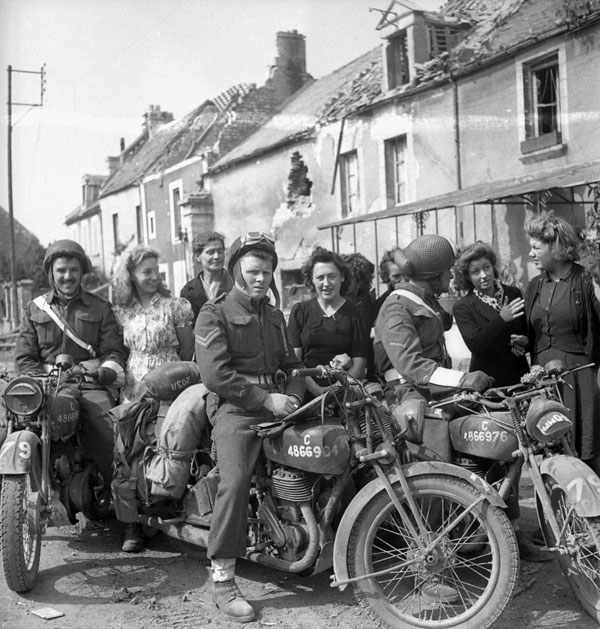
The photos contain much of the history of Canada, but I wanted to share this picture. Anyone who has every had the Steve McQueen great escape poster on their wall will recognize it right away. I think this is the best World War Two photo of a Canadian soldier I have ever seen. Let me know what you think or if about other images from the collection that you think are pretty awesome.


Personnel of No.2 Provost Company, Canadian Provost Corps (C.P.C.), talking with French civilians, Fleury-sur-Orne, France, 20 July 1944.

Friday, September 04, 2009

Will my son skype with me?

I know it doesn't appear so on the blog, but things have been busy of late. My wife and I celebrated the arrival of our son Jack on August 12th, and we have been very busy since learning all about parenthood.

Last night though we had the chance to video Skype with my son's great-grandparents. It's pretty amazing to think that my wife's grandmother grew up in Cape Breton in a single home without electricity or running water. And here we are now video conferencing with them to introduce them to their newest great-grandson.

I can't imagine what my own son will be doing in 80 years from now, but it sure seems like the future will have to continue to build on this technology.


We have some really fun projects coming in the fall and the new year, so keep an eye out. I promise things are still going here.

Friday, June 05, 2009

Befuddled Twitter Connection

The posts here have slowed a little of late but I promise we are working on some fun projects. I've also been getting more engaged with Twitter (you can find me @jralph). This happened a few weeks back, but was a great example of little connections on Twitter.

I saw a post from @mrpuffin, another teacher I follow, that he was working on Immigration posters with his students. I quickly sent him a note with links to Immigration posters in the back issues of The Beaver that he was able to use in the class. Other teachers who follow him also saw the post and followed up.

MrPuffin never would have sent me a note to say what he was doing in his classroom, but by communicating what he was doing we found an easy connection that improved the quality of education and the student experience. You can read MrPuffin's account here on his blog Befuddled.

You might also want to check out some of his thoughts on organizing the Red River Heritage Fair and technology, as well as some of his students stop motion videos like this one below. They look great!

Tuesday, April 28, 2009

History Canada Game

I have spent the last few days playing around with the History Canada Game. It's a scenario within the Civilization 3 game that explores the early settlement of Canada.

The group behind the project has just received a significant grant from the MacArthur Foundation in the United States to continue with the project development.

If you have Civilization 3 on your computer you can download and play the first scenario now. I purhcased Civ 3 online at Gamersgate.

I would be interested to know what experienced classroom teachers think about the project and the game. 

Tuesday, March 17, 2009

Thinking in Mind

Any day you find a new blogger focusing on history and digital media is a great day. So yesterday was a lot of fun unpacking Thinking in Mind, a history and digital media blog from Neil Stephenson. Neil is a grade 6 and 7 teacher in Calgary, Alberta.

It's wonderful to have a Canadian example of the great work that can be done with History and new media. Please take a look at the Cigar Box Project his students are working on which sounds like lots of fun. I also really liked this program Glogster. You can find Neil's assignment for using it to create historical timelines.

Really fun work and enjoyed learning about these projects a lot. I've added Thinking in Mind to my blog roll and the famous history teachers who blog section.

Friday, March 06, 2009

Finally discovering Twitter

I tried to twitter a few months ago. I really did and it just didn't work out and I let it go. But I find I'm running into it more and more often and so this week I went back and tried it again. Just a quick note that we all struggle at times with picking up a new tech.

Twitter is a micro-blog - everything you can say in only 140 words (see the common craft video for the full explanation). For all those things that you want to ask but aren't worth creating an email for. My second go around has been a bit more successful and I'm not following a handful of educators that I also follow through blogs. The main reason for my success if downloading and installing Twhirl so that I can get updates from people I follow right as they come in.

I actually think Twitter could be of real value in the classroom but it will take brave teachers to put it to good use. There are already some great posts about using Twitter in the Classroom. But one thing that I would be really interested to see is giving students the opportunity to run a discussion during a lecture. If you have ever attended an online workshop, there is usually a comments or questions bar at the side with running commentary.

Why not run a Twitter feed that students can watch. If you were really brave you could even project it at the front of the class so students could follow along. If you were less brave you could simply have one student or assistant monitor the feed for key questions and thoughts. It's another way to add participation which is always needed.

I can see why Twitter wouldn't necessarily function well for teachers - it's hard to follow a feed while you are teaching, but a great way to keep in touch with students and larger community of educators. I'm going to keep playing around and working on it here.

Tuesday, March 03, 2009

Tar Sands meet the Uranium Mine

A bit of storm this week has developed around National Geographic Magazine's article, photo's and (online) video of the Alberta Oil Sands development. For many people these are the first images of the Tar Sands that have been readily published and made available.

What I thought was interesting is that the entire piece reminded me of one of my favorite Beaver Magazines articles - Uranium for Atomic Power. The article, from the June 1953 issue of The Beaver, looks at what early uranium mining was like. It's a surprisingly revealing piece into the life of the workers who developed Canada's early uranium mines.

In a classroom the two articles would be really interesting to compare, in particular how reporting and media about environmental issues have changed over the past 55 years. The Beaver was far more optimistic back in the day, and I would assume their press access was probably a bit different. Compare, contrast, and learn away!

Thursday, February 26, 2009

Forward Capture: A History with Value

Forward Capture is a project created by the Center for History and New Media and the National Council on Public History in the United States. Together they are soliciting thoughts from public historians on where the future of public history. It's a great example of creating opportunities to participate in a larger sharing of knowledge and the results will form the backbone of a larger presentation at the NCPH annual meeting in April 2009.

If you haven't yet done so please make your own contribution to the site. I've posted my own entry below that tries to tackle the issue of value and history which I think is really important. And fortunately if you read my blog, occasionally, you will know that I don't normally talk like I'm staring into the sky.

The Future of Public History:

Public Historians that embrace history, and history that embraces public historians.

The future of public history is a future where history has value and is valued. For history to be important in society is has to have some value – whether it tells someone about their own personal past, the society they live in, or the events that they face. Public Historians need to serve as gatherers and aggregators, using skill sets developed through sound research and analysis, to share the value of the work done by academic and local historians with an audience of informed and interested citizens.

A field that encourages high school students to study history, encourages graduates to take history programs in college and university, and encourages university and college graduates to continue working in the field – whether through academia, education, museums, archives or publications.

A modern inviting history that is urban and edgy in style and content. Content and presentation should be fresh and bold, that utilizes the style already relevant in other fields.

A participatory history that invites each citizen to provide their own story. Together these stories provide details and life while also illuminating the larger patterns that historians research each and every day. A public history that embraces the ability of new technology, life forward capture has, to include, invite, and reshape the role of the historian.

Thursday, February 19, 2009

Change comes to Canada

Today United States President Barack Obama is making his first official visit to our national capital. I know that Canadians from coast to coast are warmly welcoming the President and it has been the main topic of discussion here for the last week at least. 

His first discussion today is with Governor-General Michaƫlle Jean (a glimpse of which I just caught on the CBC). At the time of his election the Governor-General I think best transmitted the sentiments of Canadians in her warm message of hope and celebration. You can watch her full statement on her website, www.citizensvoices.gg.ca

Citizens Voices is a great website for each and every Canadian to learn more about the valuable work the Governor-General does and to engage with other Canadians on important topics. It brings the kind of openess and inclusion that should be of value to every level of government - something I think the New President would greatly aprove. 

Welcome to Canada Mr. President.

Wednesday, February 18, 2009

TED: Ideas woth spreading to your students


One of the reason's why I started on this digital history adventure just over three years ago was that I was going to graduate from University. I wasn't worried about the work place or what the future held - that actually excited me and I was hopeful of trying new things. But what I was worried about was loosing touch with a larger academic community. I felt that through technology I could still continue to learn - learn about history, about technology, and about just great ideas that still made my brain jump the way it did in University.

Fortunately the number size of the online idea community is continuing to grow, and one that is readily available to your students. We talk often about issues of civics and engagement, making sure that students are informed about what is happening in the world. Surely a great endeavor that is of the utmost importance. But at some point students also need to learn about more that what is on the six o'clock news or in the local paper - we have to have some connection to a wider current of ideas and thoughts.

Which brings me back to TED: Technology, Entertainment, Design. I love hearing interesting and smart people talk about things they find interesting and are passionate about. Anytime you can hear or spend time with a passionate person, you will grow yourself. In life we often have too few opportunities to share in this community.

TED let's you meet interesting and passionate people everyday. They inspire people in a wide variety of fields but share common threads that somehow relate back to each of us. Never in history have we had such opportunities - through TED and other projects - to learn and share in the wisdom of others. They do it because it matters to them and they are passionate about their work.

Every classroom should take a few moments out for a TED talk now and then. And of course they have a school program as well - so start finding the special lights in your community.

Sunday, February 08, 2009

Popular Relevance

As part of an Introduction to Learning Technologies course at the University of Manitoba I've been exploring the program Digg. We drew our projects from We Are Media, a website designed to help non-profit organizations better use new media in their endeavours.

Digg is a social bookmarking tool that you may have noticed before on many news or information websites. The tool allows you to "digg" content that you are in to (if that's what you're into). Content that is most popular, in theory, rises to the top and shares information with a larger audience, focusing in on the best and most interesting stories.

There are some great advantages to Digg that make it very accessible. The program allows to you install a toolbar and follow sites live as you visit them, seeing who and how many people are interested in a website.

But for educational purposes, and arguably for any purposes online, Digg provides more of a popular than relevant story. Content is largely pulled from mainstream media websites with stories "Dugg" by a core group of supporters.

Creating communites of practice and learning communities doesn't require mass participation. I trust the websites and blogs of my colegues to post material that I'm interested in and that is relevant. I don't really expect it to be popular with a wide audience. If I wanted that I would have stayed with traditional media sources - they are surprisingly good at covering all things popular.

The other thing is that Digg let's you build a community of "Friends." But this suggests that I only learn from my friends. I often times learn from complete strangers. It's the thousands of people circling the globe, people I never would have met before, that are often working on and considering simliar thoughts and issues.

For now I'm sticking with Del.ico.us, in fact I think I'm even going to start tagging even more.

Tuesday, December 09, 2008

Charter of Rights and Freedoms via Wordle

A couple of months ago I posted about a program called Wordle which allows you to create "word clouds" from a body of text or a blog. I had a couple of ideas but hadn't really thought that much more about it.

I was just listening to Eric Langhorst's podcast over at Speaking of History and he instantly got me interested in it again. Teaching about American government, he ran the US constitution through Wordle and created a great starting point for a class discussion. It's fun and engaging and immediately provides a windown into the focus of the document.

So of course I reached for our Canadian equivalent and ran the Charter of Rights and Freedoms through Wordle and got the following result:

Click on the link and try putting your own historical documents into Wordle - let's see what other results we can come up with.

Tuesday, November 25, 2008

Meet the Teachers

Each year Canada's National History Society presents the Governor General's Awards for Excellence in Teaching Canadian History. Last year we piloted a new program to record interviews with our recipients and share them with a wider audience

The results were positive and this year we have improved the quality significantly. Meeting and sharing ideas seems so key to the online experience and it just shows how easy it has become to share the work of these tremendous teachers.

Rather than reading a bio, we now have the opportunity to step into the classroom and meet the teachers, to see their projects and personalities shine through. There are six video's in total, but I posted Mike Ward's below. Reading about his project of creating a table with a settler community is one thing, but seeing it in action is totally different. Each of the videos brings that life forward.


A special thanks to our videographer Jayson Go for his help with each of the videos.

Also a thank you to Philip Ling, Shephanie Ha, and Geoff Ives, in Ottawa who did a great job on a short timeline helping with the video interview of Jean-Pierre Frigon.

Wednesday, November 19, 2008

History Flash

Ok Historians, you know you would have fun with a little flash tool like this.

I watched the election results through the New York Times as well. There website is just so far ahead of everything else.